
Jun 18, 2021 | Article
A sperm donor has failed in his bid to have contact with the child he ‘fathered’. This is the effect of a ruling by Gauteng High Court (Pretoria) in an unusual battle in which the donor and his mother sought visitation rights for the now five-year-old child. The application was dismissed with costs.
The application was strongly opposed by the child’s parents, a same-sex couple who underwent artificial insemination to enable one of them to conceive. The judge said while the applicant, whom he referred to as QG, and his biological grandmother may well love and feel a strong bond with the child, that did not give them the right to interfere in ‘the little special place (the respondents) have created for themselves’. ‘While it may appear to be harsh, that is ultimately what is needed to respect and protect the intention and choice of the respondents in constituting their family.
The applicant, an interior decorator, brought the application in two parts.
The first, which was dealt with by the Judge, was for visitation rights.
The second will be launched after a still-to-be-held inquiry by the Family Advocate.
In that, QG wants rights of contact and care and joint guardianship. In his application QG did not rely on a ‘biological right’, but on the bond. This because SA law is clear that sperm donors do not have any rights. ‘This legal certainty is essential for sustaining the artificial reproductive system in SA. If this is compromised, donors would not be willing to donate, recipients would not be willing to accept donations and infertility would become an unsolvable burden,’ the Judge said.
The judge said it was clear when the agreement was reached, no role was envisaged for the applicant in the child’s life. ‘They say, and this is not unreasonable, that out of a sense of gratitude they allowed him to have some limited contact with the child, but they did not open the door to the kind of rights he now seeks.’ noted the Judge.
‘It must be so that a family is often about intimate space and special bonds. While that space may be open to scrutiny when it involves the best-interests-of-the-child principal, it is also a space that requires protection and insulation from undue outside influence. It is a far stretch to suggest that someone, who out of goodwill and gratitude reaches out and is warm and inviting to another, must then carry the consequences that such conduct may trigger a rights claim on the part of the other.
This is not tenable and were it allowed it would have a chilling effect on ordinary human relations,’ the judge said. Regarding QG’s claim that the child needed a father figure, the Judge said the focus should be the environment of love and caring created for the child, not the sexual orientation of its parents.
(Source: LegalBrief)
Jun 18, 2021 | Article
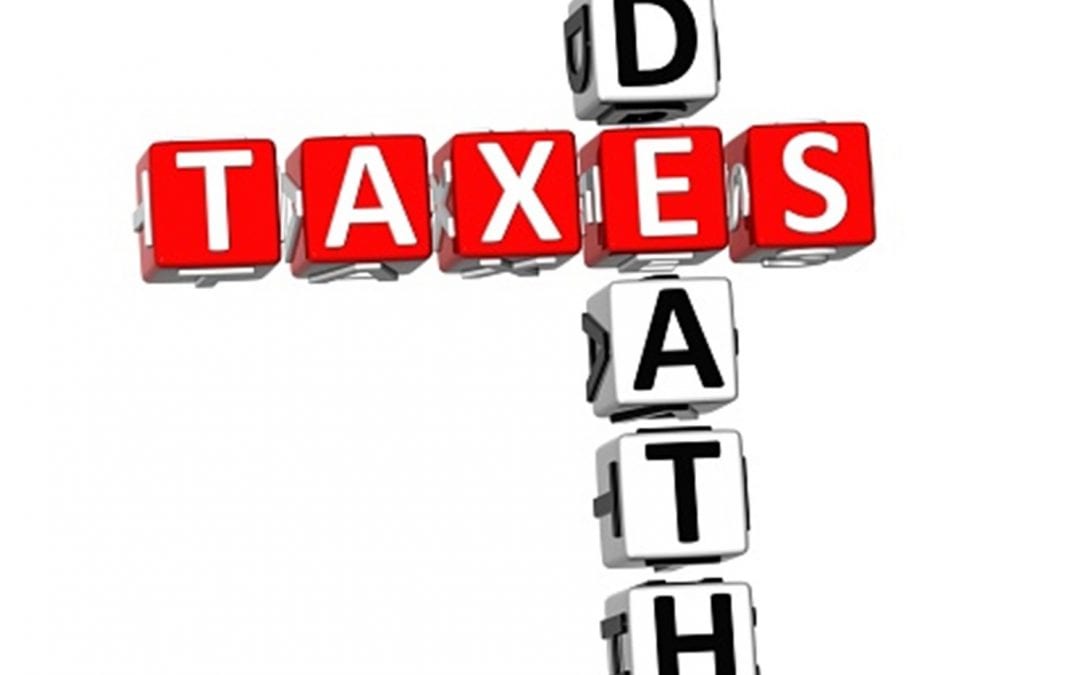
Estate Duty is a material ‘death tax’ that very few people take cognisance of. Luckily, in terms of Section 4(q) of the Estate Duty Act, but subject to its strict requirements, relief is provided to surviving ‘spouses’ who may have contributed to the accumulation of their assets, by allowing a deduction of the value of all property, which accrues to the surviving spouse, from the gross estate of the deceased. No Estate Duty is therefore payable on qualifying assets.
This provides some relief for surviving ‘spouses’ who may end up having to part with assets they used to share with their spouses, just to pay Sar’s tax bill. The definition of ‘spouse’ for this purpose includes a permanent life partner and not only a legal spouse in terms of the Marriage Act or the Civil Union Act. People are advised that this deduction can also be applied when a trust is set up to basically avoid/bypass Estate Duty. Such a structure is commonly referred to as a “Widow’s Trust”.
Section 4(q) was however cleverly crafted by Sars and people will be ill-advised to take such advice, which may leave you ‘out-of-pocket’ upon your spouse’s death if you have not made provision for this tax. The purpose of this section is only to postpone the payment of Estate Duty and not the avoidance thereof.
When the section is carefully analysed, the following is important to successfully utilise this ‘rollover’ (postponement) of the Estate Duty obligation until the surviving spouse’s death:
· The phrase “accrues to the surviving spouse” means that the surviving ‘spouse’ may receive the assets either in terms of the deceased’s will, or through intestate succession.
-
The phrase also means that it is not only limited to property bequeathed to the surviving ‘spouse’ in the deceased’s will, but any other property that accrues to the surviving ‘spouse’ on the deceased’s death, such as the proceeds of life insurance payable to the ‘spouse’ as beneficiary, or any annuities that may accrue to the surviving ‘spouse’.
- It only applies to amounts, which the surviving ‘spouse’ is not required in terms of the will of the deceased to be disposed of to any other person or trust. The assets will therefore have to be held by the surviving spouse after the estate is wound up. If the spouse was allowed to dispose of the assets to a third party, Sars would be out-of-pocket with the relevant Estate Duty and would never recover it.
- Assets may be transferred to a trust, subject to specific requirements to avoid a situation where the assets are ‘absorbed’ by the trust without paying Estate Duty upon the death of the surviving ‘spouse’. The first part of the section states that the assets have to “accrue to the surviving spouse” – they have to become ‘due to them’ and no one else, including the trust or other beneficiaries. The only type of trust that can apply in this instance is a bewind trust – where the assets are held in the name of the ‘spouse’ (the beneficiary), but the assets are controlled and managed by the trustees. The last part of the section however refers to “property which accrues to a trust” as long as the trustees do not have any “discretion to allocate such property or income therefrom to any person other than the surviving spouse”. This wording suggests the possibility of a vesting trust where the assets are held in the names of the trustees, but they ‘vest’ in the surviving ‘spouse’ (the beneficiary). In both instances the assets fall into the estate of the surviving ‘spouse’ (as beneficiary) – as intended by Sars – and all income and capital gains accrue to, and are taxed in the hands of, the surviving spouse (as beneficiary).
The following is clear from the wording:
- The trust may be registered during the lifetime of the deceased (an inter vivos trust) or upon their death (a testamentary trust). It may however be a challenge to get the wording of an inter vivos trust in line with these requirements.
- The trustees are not allowed to be afforded any discretion in the trust instrument regarding both the assets as well as income generated by such assets. If other assets are mingled with assets accrued to the surviving ‘spouse’, the trust instrument will have to be carefully crafted to separate these assets from the rest, which may be subject to the discretionary powers afforded to trustees in a typical discretionary trust. Our law allows a combination of vested and discretionary rights in the same trust.
- An asset consists of its ‘bare value’ plus the value of its ‘right of use’, which has separate values. A formula is applied by Sars to calculate the two components of the asset. The beneficiary cannot only be allowed to receive the income but not getting access to the capital ever, in terms of these “Widow Trusts”, to qualify for a full deduction of the asset value from the deceased’s estate – only the portion of the total value of the asset allocated to the surviving ‘spouse’ may be allowed as a deduction.
- The section only applies to assets actually held by the deceased upon their death, and no other assumed assets – which may give more favourable values – may be used in stead in the calculation of the value of the ‘right of use’ of those assets.
- When calculating the ‘right of use’ of an asset, future income projections that may be better than its historical lower performance may be used, as long as they are reasonable.
- The section also makes it clear that the asset and/or the income thereon has to be (automatically) allocated (either outright owned by them or by the trust, but vested in them) to the surviving ‘spouse’ – with the result that they get taxed on the related income and capital gains and the asset forms part of their estates for Estate Duty purposes (as intended by Sars) – without allowing any discretion to the trustees.
Any incorrect advise may have dire consequences, which may leave a large cash flow gap (20% to 25% of such assets) if Sars disallows a Section 4(q) Estate Duty ‘rollover’.
~ Written by Phia van der Spuy ~

Jun 18, 2021 | Article
The Rand in tandem with South African stocks retreated yesterday, tracking declines in emerging-market peers as the US Federal Reserve’s hawkish turn hurt appetite for riskier assets. The Rand slid to R14.16 to the greenback yesterday and is currently trading at R14.07. Major miners were a big drag on the benchmark equity index as a stronger Dollar hit metals prices. The FTSE/JSE Africa All Share Index slipped 0.7% in Johannesburg yesterday, falling for a second day as trading resumed after Wednesday’s public holiday.
Locally, investors are awaiting retail sales data for April and assessing the impact of tighter restrictions aimed at countering soaring Covid-19 infection rates. Anglo American dropped 2%, to cause the largest drag on the benchmark gauge, and BHP fell 1.1% as an index of industrial-metals miners slid 1.5%, declining for a third session. A gauge of precious-metals producers dropped 2.8%, falling for an eighth day in the worst losing streak since February 2018, after gold capped the biggest drop in five months. Foreign investors have continued a recent spate of selling South African equities, disposing of a net R601 million of local stocks on Tuesday, according to the JSE, marking an eighth day of outflows. (Source: E Biz Blitz/Bloomberg)

Jun 11, 2021 | Article
This is a useful article setting out how important the role of a Trustee is and why appointment as a |Trustee should not be taken lightly – Ant Jenkins
By Louis van Vuren, CEO of FISA
Have you been asked to act as a trustee on a trust?
Are you planning to appoint a trustee?
This overview from FISA provides brief guidance on the responsibilities of a trustee and points out that it is not a role to be taken on lightly.
The Trust Property Control Act No. 57 of 1988 (“the Act”) defines a trust as an arrangement through which ownership of a person’s assets is entrusted to the trustees or beneficiaries, with the trustees being tasked to administer these assets according to the trust instrument for the benefit of the beneficiaries. (The trust instrument is the trust deed or the will in terms of which the trust is created).
Based on this definition, it is clear that the administration and governance of a trust is completely in the hands of the trustees, which means that the position of trustee comes with a substantial amount of responsibility. The Act requires a trustee to act with the care, diligence and skill which can reasonably be expected of a person who manages the affairs of another. This is called a fiduciary relationship. The standard of care required of a trustee is similar to that of a director of a company. The fiduciary relationship requires the trustee to act honestly and in good faith in relation to the trust, the beneficiaries and the other trustees, and to exercise the powers that he or she may have to manage the trust in the interest of the beneficiaries and for their benefit.
The three main principles of trustee duties can be summarised as follows:
- The trustees must carry out the trust deed as far as it is lawful and effective under the laws of the place where the administration is to take place
- The trustees must act “with the care, diligence and skill which can reasonably be expected of a person who manages the affairs of another”
- The trustees must exercise independent discretion in all matters except questions of law.
Trustees can be sued by the beneficiaries if they do not fulfil their fiduciary duties or are negligent in any way. It is therefore essential for trustees to know and understand their duties. These duties are mainly imposed by the trust instrument, but there are also specific duties imposed by the common law and statute (specifically the Act). Here are some of the most important duties of a trustee:
- Know, understand and observe the trust instrument – it is the founding document which gives the trustees their powers
- Take control of the trust assets
- Always act jointly and in good faith – contractual powers must be exercised by all trustees acting together
- Make the trust assets more productive – the trustees have a duty to obtain a reasonable return on the trust capital
- Keep trust assets separate – trust assets must never be blended with a trustee’s personal assets
- Always be impartial – trustees must, as far as possible, avoid conflict between their private interests and their duty as trustee. They must also, as far as possible, treat beneficiaries impartially
- Preserve the trust assets – this may in some instances extend to selling trust assets and re-investing the proceeds
- Keep accurate minutes of meetings, proper resolutions and comprehensive records of all transactions
- Provide the beneficiaries with details of the administration of the trust and its assets
- Open and maintain a bank account
- Register the trust assets (where applicable) and keep the assets identifiable as trust assets
- Keep safe custody and control of documents of the trust
- Prepare and submit income tax returns
- Account to the Master of the High Court if called upon to do so
- Have in-depth knowledge of all relevant laws that govern and/or impact trustees, including but not limited to the:
- Trust Property Control Act 57 of 1988
- Immovable Property Act 94 of 1965
- Income Tax Act 58 of 1962
- Estate Duty Act 45 of 1955
- Have a working knowledge of the law of contract, property and marriage
- Be familiar with prudent investment vehicles
- Have knowledge of Foreign Exchange Control Regulations
- Have knowledge of the Financial Sector Conduct Authority (previously the Financial Services Board) and its reporting requirements
It should be evident from the above that the role of trustee is not an appointment to be taken lightly. It is important when appointing a trustee to ensure that the person understands the legal requirements applicable to trustees and has the necessary experience. It is therefore wise to appoint a person who is a member of a professional body that sets high ethical standards for its members.

Jun 2, 2021 | Article
This is an interesting article by accountants Alan H English on the tax implications of holding or trading in Cryptocurrencies.
The future of money is digital currency” (Bill Gates, Co-founder of Microsoft)
Note: The risks and consequences of wilfully or negligently failing to make full and true declarations to SARS, or to submit documents or information requested by SARS are now substantial, so ask your accountant for advice specific to your circumstances!
Cryptocurrencies have been around for over a decade, with the first and most famous one – Bitcoin – launched in 2009. Since then, many other cryptocurrencies have been created and supported in the market, including for example Ethereum, Litecoin, Dogecoin and Bitcoin Cash.
Regulators have been slow in responding to the rapid fintech developments behind cryptocurrencies. However, further cryptocurrency regulation is certainly on its way, and the Intergovernmental Fintech Working Group (IFWG), a group of South African financial sector regulators, published a policy position paper on crypto assets to provide specific recommendations for the development of a regulatory framework.
In the meantime, however, many cryptocurrency owners may be unaware that their cryptocurrency gains will most certainly be taxable by SARS – and in the year of assessment in which income or gains are received by or accrue to the taxpayer – not only if or when the cryptocurrency is withdrawn and converted into legal tender.
What’s the sudden spotlight on cryptocurrencies?
A number of recent developments have catapulted cryptocurrencies into the spotlight.
The first was the Bitcoin boom over the last year. Having maintained a price under $10,000 for years, excluding two peaks in December 2017 ($13,000) and June 2019 ($12,000), Bitcoin’s price started to skyrocket in September 2020 as big-name companies such as PayPal, Mastercard and Square began to accept it.
Early in 2021, the price of Bitcoin reached a staggering $60,000, following Tesla’s announcement that it had acquired $1.5 billion worth of Bitcoin and the public listing of US cryptocurrency platform Coinbase Global on the Nasdaq. In February, Bitcoin breached the $1 trillion market capitalisation mark.
Local Bitcoin investors would have seen the price of their bitcoin jump from under R100,000 in March 2020 to just under R430,000 at the end of 2020 to almost R1 million in April 2021, doubling in value in just a few months.
Many South Africans started investing in cryptocurrencies during the boom, with a global crypto platform operating locally saying it had registered more than a million new cryptocurrency accounts in under two months, South Africa being in the top four highest growth locations.
SARS’ scrutiny not surprising
It is not surprising that these substantial gains and the fast-growing number of South African investors in cryptocurrencies have come under specific scrutiny from SARS. It presents an opportunity to collect substantial taxes from a previously untapped source at a time when all other options for tax increases and new taxes have been exhausted.
In addition, earlier this year, R3 billion was allocated to SARS in the Budget to improve its ability to track undeclared assets and income, including a dedicated unit to uncover “undisclosed offshore assets, including crypto-assets such as bitcoin” and other cryptocurrencies.
Unfortunately, very few South Africans holding cryptocurrency are likely to be aware of the tax liability they could be facing.
So, while cryptocurrency platforms are not yet legally required to report on their clients and while SARS boosts its tracking abilities, our tax authority has simply begun asking for information on crypto transactions in audit letters issued to taxpayers – even to taxpayers that have never traded in cryptocurrencies.
The information requested includes the purpose for which the taxpayers purchased cryptocurrency, as well as bank statements, and a letter from the trading platform(s) confirming the investments and the relevant trading schedules for the period.
Thanks to recent legislative changes that have made it a criminal offence for a taxpayer to wilfully fail to submit a document or information as requested by SARS, or to make a false statement to SARS, non-compliant taxpayers could be liable to a fine or imprisonment for up to two years – or up to five years for attempted tax evasion or obtaining an undue refund.
SARS’ stance
In 2018 SARS issued a media statement confirming that the existing tax framework and normal tax rules will apply to cryptocurrencies and that affected taxpayers are expected to declare cryptocurrency gains or losses as part of their taxable income.
It said that cryptocurrencies such as Bitcoin are considered by SARS to be “assets of an intangible nature”, and that capital gains tax or normal tax may apply, depending on whether you are investing for the long term or trading actively for short-term gain. SARS will likely consider cryptocurrency-related gains to be revenue in nature and the onus will be on the taxpayer to prove otherwise.
For long-term investors, cryptocurrency is deemed “capital assets” and gains will be taxed at Capital Gains Tax rates – up to 18% for individuals and 22.4% for companies. The purchase price of cryptocurrency is deemed to be the price paid on date of purchase.
Active trading will ensure your cryptocurrency is considered “trading stock”, with the income “received or accrued” falling under the definition of “gross income” in the Income Tax Act and profits taxed at normal income tax rates, between 18%–45% for individuals and 28% for companies.
Cryptocurrencies income can be “earned” in various ways, all of which are subject to normal tax.
- A cryptocurrency can be obtained by so-called “mining”. According to SARS, until it is sold or exchanged for cash, cryptocurrency obtained in this way is held as “trading stock” that can then be realized through an ordinary cash transaction, or through an exchange transaction.
- Cryptocurrency may be received as income by a self-employed independent contractor for performing services; or received as remuneration or wages for services from an employer.
- Cryptocurrency may be accepted as payment for goods or services. Where goods or services are exchanged for cryptocurrencies, such a transaction is deemed to be an exchange transaction and the usual exchange transaction rules apply.
- Investors can exchange local currency for a cryptocurrency (or vice versa) by using cryptocurrency exchanges, or by private transactions.
- If a trade is made between two cryptocurrencies, for example Bitcoin and Ethereum, the profits are also taxable.
Failure to declare cryptocurrency holdings, income and gains could result in interest, penalties and criminal prosecution.
What you should do now
(Remember to get expert advice specific to your circumstances!)
- SARS says that the responsibility rests with taxpayers to declare all taxable income in respect of cryptocurrency in the tax year in which it was received or accrued. If you mined cryptocurrency; bought any cryptocurrency; exchanged cryptocurrency for another cryptocurrency; or were in any way paid in cryptocurrency, it must be declared.
- As with other asset classes, it is important to understand cryptocurrency investments and the attendant tax obligations, and to plan accordingly. A buy-and-hold strategy is more tax efficient, but professional tax advice is recommended for each individual case.
- If you have received a request for information from SARS – whether or not you have traded in cryptocurrency – immediately contact your accountant for professional assistance.
- Whether or not you have received communication from SARS, if you have not disclosed cryptocurrency holdings, income gains and losses, contact your accountant for specialist tax advice.
- Keep records of all transactions – according to SARS conventional receipts and/or invoices are acceptable proof of purchase and sale price.
- Use software to track crypto transactions – cryptocurrency platforms do not provide SARS compliant tax certificates such as the IT3c provided by financial services institutions for tax returns.
- Declare cryptocurrency holdings, income, gains and losses correctly –
- SARS has already included questions about cryptocurrency investments in the capital gains tax portion of tax returns;
- The income or market value thereof forms part of total taxable income in respect of the year of assessment on a provisional tax return (IRP6);
- Taxable income in the source code or tax return container field provided on the ITR12 form.
- Individuals can make use of the annual Capital Gains Tax exclusion of R40,000.
- Claim deductions – deductions against cryptocurrency income are allowed if they meet the requirements of the Income Tax Act, including whether expenditure is incurred in the production of income or for trade purposes – for example costs relating to computers, servers, electricity and internet service provider charges.
- Offset losses – losses on cryptocurrency bought as investments will count as capital losses. However, it can only be deducted from capital gains. If there are no capital gains to deduct losses from, the losses can be carried over to the next tax year. You will be well advised to obtain expert tax guidance in this regard.
© DotNews. All Rights Reserved.
Disclaimer
The information provided herein should not be used or relied on as professional advice. No liability can be accepted for any errors or omissions nor for any loss or damage arising from reliance upon any information herein. Always contact your professional adviser for specific and detailed advice.

May 21, 2021 | Article
(I am of the opinion, however, that the portion that I have italicised below, may not be completely correct as there are limits to what a Trustee may and may not do on behalf od such a person, and where a Curator Bonis would be required. I do agree, however, that a Trust can be useful to a certain extent in these circumstances)
The article
An ageing worldwide population carries a high risk of dementia, a condition that is so far neither preventable nor curable. An estimated 35.6 million people – differently put 0.5% of the global population – are affected.
Alzheimer’s disease (a condition that affects the brain) is the most common form of dementia, a general term for memory loss and other intellectual abilities serious enough to interfere with daily life. It is named after Dr Alois Alzheimer, who first described the condition in 1906. It accounts for 50% to 80% of dementia cases. It is a progressive disease – the symptoms are mild at first and become more severe over time. In the case of very serious forms of mental illness, a person may not be able to look after their own affairs any longer.
In the event that a person becomes mentally disabled a trust can be used to avoid the need to place a person under curatorship. A board of trustees, selected by the person, can then look after the financial affairs of that person.
From a tax perspective, the Income Tax Act makes provision for the creation of a special trust, where the trust is created for the benefit of a person who cannot take care of their own affairs due to a disability, such as a serious mental illness.
A special trust established during the life of a person is one created for the benefit of one or more persons with a disability as defined in Section 6B of the Income Tax Act – this includes a moderate to severe limitation of any person’s ability to function or perform daily activities as a result of a physical, sensory, communication, intellectual or mental impairment that has lasted or has a prognosis of more than a year. It is required that the disability must be diagnosed by a duly registered medical practitioner. Alzheimer’s Disease and simple senile dementia fall within this definition.
On 28 June 2018 the South African Revenue Service (Sars) issued a binding private ruling (BPR 306) in which the applicant, a person in the early stages of dementia, but still lucid and with the capacity to contract, distributed part of her estate to a special trust she had established for her care and maintenance.
With a BPR, Sars provides an advance tax ruling on a transaction that is still to be concluded in the future. The purpose of this system (and the BPR) is to promote clarity, consistency and certainty regarding the interpretation or application of one of the tax acts administered by Sars, such as the Income Tax Act. It is important to note that a BPR may not be cited in any proceeding before Sars or the Courts, other than a proceeding involving the taxpayer applicant. The BPR does, however, provide more clarity on how Sars is likely to interpret any particular provision of a tax act. The specific facts present on the BPR provided must be considered if one wishes to be guided by its application since the BPR is based on a specific set of facts that may influence the outcome of Sars’s view.
The lady created a discretionary trust with herself as the primary beneficiary with other beneficiaries listed as secondary beneficiaries – the founder was to benefit alone from the trust until her death. The purpose of the trust was to provide for the applicant’s care and maintenance when she was no longer able to do so. The fact that there were other beneficiaries did not affect the trust’s status as a special trust, because their discretionary right would come into operation only on the death of the applicant.
In addition to the trust serving as a vehicle to look after her during her lifetime, it also serves an estate planning purpose as one may establish a special trust that continues seamlessly for the benefit of the remaining beneficiaries without the need to terminate the trust and create a new one for those beneficiaries – this is achieved by establishing two classes of beneficiaries and only the disabled person having rights until that beneficiary’s death.
Sars ruled that the move of her assets to the trust was not a donation as contemplated in Sections 54 and 55 of the Income Tax Act. If you have created a trust during your lifetime and become afflicted by one of these dreadful conditions, your financial affairs would continue as before, with persons that you entrusted as trustees of the trust.
If you do not yet have a trust set up by the time you become mentally disable, you should do so at an early stage whilst you are still lucid and have the capacity to contract. A special trust is not a viable solution for persons already suffering from mental incapacity but may be useful as a remedy in anticipation of incapacity. The appointment of trustees should also be carefully considered in anticipation of these circumstances.
~ Written by Phia van der Spuy ~

Recent Comments